
Before asking for a packaging quote, confirm these five points first: box structure, size, quantity, paper material, and finishing process. This helps avoid rework and keeps lead time predictable.
1) Structure first, design second
Choose folding carton, rigid box, or sleeve based on product protection and shelf display.
2) Size + quantity define your price range
Provide L × W × H and estimated quantity tiers (e.g., 500 / 1000 / 3000).
3) Material and finishing must be evaluated together
Balance brand look with production stability and budget.
4) Proofing is risk control
Use white mockup and color proof before mass production.
5) Prepare a minimum RFQ package
Include product dimensions, target quantity, use case, and lead time requirement.
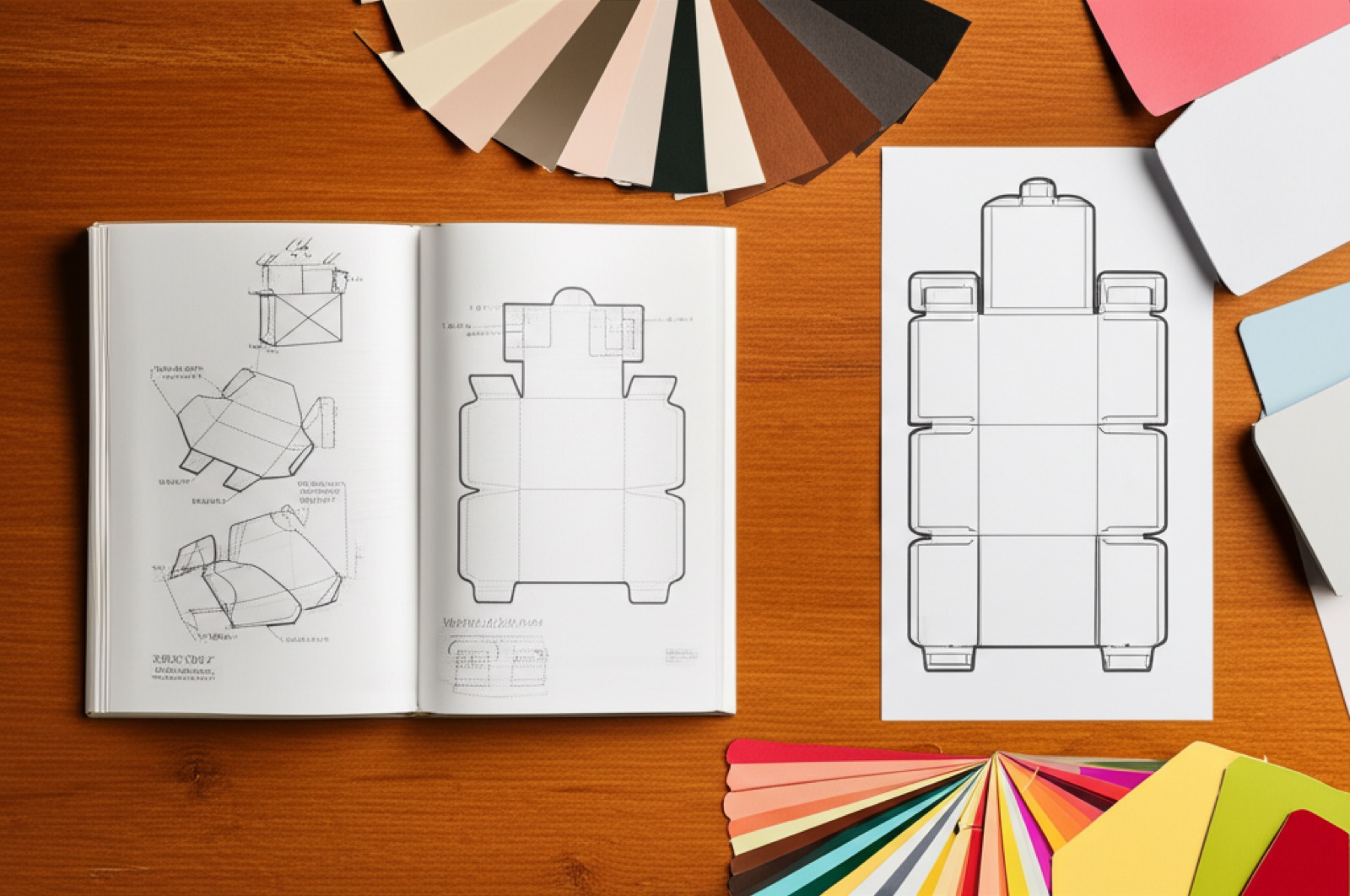
Structure Selection Comparison
The table below summarizes common structure types, ideal use cases, and MOQ reminders:
| Structure Type | Ideal For | MOQ Reminder |
|---|---|---|
| Folding Carton / Flat Bag | Mass retail, mainstream volume | 500 units+ |
| Rigid Box / Top-Bottom / Handle Bag | Premium brands, gift boxes | 100-300 units+ |
| Drawer Box / Custom Structure | Multi-SKU sets, subscription boxes | 300 units+, higher tooling cost |
| Cylinder / Paper Can / 3D Bag | Cream, fragrance, gift items | 200 units+, requires specialist |
Material & Surface Finishing Comparison
Material determines the structural strength, texture, and cost. The comparison below covers common options:
| Material Type | Ideal For | Cost Note |
|---|---|---|
| C2S Art Paper 280-350 gsm | Mid-to-premium mainstream | Stable supply, most cost-friendly |
| Fine Art / Imported Paper 200-280 gsm | Premium brands, limited editions | Color matching requires sample, longer lead time |
| FSC Certified / Recycled Paper | ESG sustainable brand positioning | Certification fee, 500 units+ |
| Special Finishing (Foil / Spot UV / Embossing) | Premium gift boxes, brand flagship | Sample required, stacking processes add cost |
When This Guide Doesn’t Fit Your Project
This guide covers most starter brands and flexible inventory scenarios, but the following are not the right fit — consider alternative suppliers or materials to avoid procurement delays or budget overruns:
- Single SKU annual volume stable above 50,000 units (direct mass production unit cost is lower; small-batch sourcing is not cost-effective)
- Long-term reorders with unchanged specs (no need to resample for evergreen products; the proposal flow is overkill)
- Pure glass / plastic bottles / metal canister sourcing (paper packaging factory MOQ doesn’t fit; find material-specific specialists)
- Pure accessory sourcing (cards, stickers, manuals, corrugated cartons) — use accessory-specific channels
- 45+ day cross-border ocean freight (paper is moisture-sensitive; consider metal / plastic containers or special treatment)
近期留言